
Looking for the best deep web links? You’ve come to the right place. In this article, you’ll find a selection of interesting onion websites, from private search engines and hidden directories to file-sharing platforms and online communities.
If you’re curious about exploring the Deep Web, this is a good place to start.
But before diving in, there’s something you should know. The Deep Web includes content that traditional search engines don’t index, while the Dark Web refers to networks and websites that require specialized tools to access.
The onion sites listed here operate through the Tor network.
To open these links, you’ll need a compatible browser. We recommend Tor Browser, which was specifically developed to access the Tor network. Brave also includes a private window with Tor connectivity, although it doesn’t provide the same anonymity protections as Tor Browser.
Now that we’ve covered the basics, let’s explore some of the most interesting deep web links.
1. The Hidden Wiki: Onion link directory

The Hidden Wiki is one of the most recognizable directories on the Dark Web. Think of it as a collection of deep web links organized into different categories, making it easier to discover websites that aren’t accessible through conventional search engines.
Instead of searching for individual onion addresses, you can browse a directory containing various websites and online services.
Some provide legitimate tools and resources, while others may lead to questionable or illegal content.
That’s why it’s important to be careful when following unfamiliar links. Being listed in a directory doesn’t automatically make a website trustworthy.
If you’re just beginning to explore onion sites, The Hidden Wiki can serve as a starting point.
Deep web link:
http://paavlaytlfsqyvkg3yqj7hflfg5jw2jdg2fgkza5ruf6lplwseeqtvyd.onion/2. OnionShare: Secure file sharing on the Deep Web

OnionShare is a free, open-source tool that allows users to share files privately through the Tor network.
Unlike traditional platforms such as Google Drive, Dropbox, or WeTransfer, OnionShare doesn’t require uploading files to a conventional cloud storage service.
Instead, the application creates a temporary onion address that can be shared with another person.
When the recipient opens that address, the file is transferred through a Tor connection directly from the computer hosting the OnionShare service.
The software was originally developed by Micah Lee and has become a useful option for people who need to exchange sensitive information.
It also includes features for receiving files, creating private chats, and hosting temporary websites.
Journalists, activists, whistleblowers, and privacy-conscious users are among the people who may benefit from tools like OnionShare.
One of its biggest advantages is that users can control when their sharing service becomes available and when it shuts down.
Secure file-sharing link:
http://lldan5gahapx5k7iafb3s4ikijc4ni7gx5iywdflkba5y2ezyg6sjgyd.onion/3. Onion Status Checker: Check whether onion sites are online

There’s one frustrating thing about the Dark Web: websites can disappear without warning. An onion link that worked yesterday might suddenly stop responding today.
No explanation. No redirect. Just another dead address. That’s where Onion Status Checker comes in.
This tool helps users check whether an onion website is responding through the Tor network.
Instead of manually opening every address, you can use the service to check whether a particular onion site appears to be online.
It’s especially useful if you maintain a collection of deep web links and want to identify addresses that are no longer accessible.
However, there’s an important detail. A website being online doesn’t mean it’s safe.
Onion Status Checker can help determine whether an address responds, but it cannot guarantee that the website is legitimate or free from malicious content.
Still, it’s a practical tool for anyone who regularly explores the Tor network.
Deep web link:
http://5f2jwwojzi5fljxqqmityqlses3leqchjapgmdawc2n3i3tgmmleuuyd.onion/4. DuckDuckGo: Private search engine on the Tor network

DuckDuckGo is one of the best-known privacy-focused search engines on the internet.
Unlike search engines that build extensive advertising profiles around users, DuckDuckGo emphasizes reducing personal tracking.
It’s also a familiar search option for people using Tor Browser. But what many users don’t realize is that DuckDuckGo also has an onion address.
This allows people to access the search engine directly through the Tor network rather than relying on its regular website.
For users interested in online privacy, it’s another way to perform searches while keeping their browsing activity within Tor.
However, DuckDuckGo isn’t designed to index every hidden website on the Dark Web. It’s primarily a general-purpose search engine with an onion-accessible version.
Even so, it deserves a place among useful deep web links.
DuckDuckGo onion link:
https://duckduckgogg42xjoc72x3sjasowoarfbgcmvfimaftt6twagswzczad.onion/5. Dread: The Reddit of the Dark Web
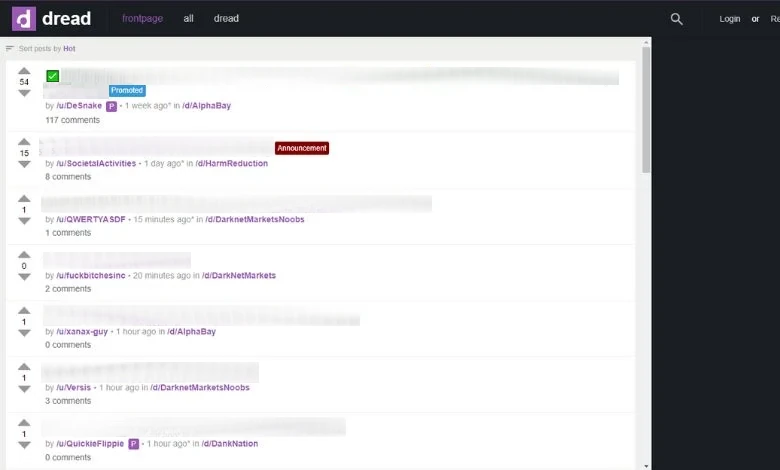
Reddit has dominated online discussions for years, bringing together communities interested in almost every imaginable subject.
But what happens when people want a similar platform operating through the Tor network?That’s where Dread comes in.
Dread is an anonymous discussion platform that resembles Reddit, with communities, posts, and conversations organized around different topics.
Its focus on anonymity and less centralized moderation has made it a recognizable name within the Dark Web.
Users can explore discussions and interact with communities through an interface inspired by traditional internet forums.
Of course, anonymity doesn’t automatically make information reliable.
Like other anonymous platforms, Dread may contain scams, misleading information, and discussions involving illegal activities.
Still, it’s an interesting example of how familiar social platforms have been adapted to the Tor ecosystem.
Dread onion link:
http://dreadytofatroptsdj6io7l3xptbet6onoyno2yv7jicoxknyazubrad.onion/6. Mail2Tor: Private email service

Email is one of the most widely used communication tools on the internet. But if online privacy is a priority, conventional email providers might not always meet your expectations.
Mail2Tor is an email service accessible through the Tor network. It provides an alternative for users who want to access email through an onion address instead of a traditional website.
By using Tor, users can reduce the exposure of their network location when connecting to the service.
However, it’s important to understand that accessing email through Tor doesn’t automatically provide end-to-end encryption or complete anonymity.
Your privacy still depends on the service, the information you share, and how messages are handled.
For anyone exploring communication tools available on the Deep Web, Mail2Tor is another service worth knowing about.
Deep web email link:
http://mail2torjgmxgexntbrmhvgluavhj7ouul5yar6ylbvjkxwqf6ixkwyd.onion/7. OnionLinks: Explore more deep web websites

The Hidden Wiki isn’t the only directory available on the Tor network. OnionLinks is another platform that brings together onion websites from different categories.
Its purpose is simple: help visitors discover deep web links without having to search for every address individually.
You can think of it as a directory that organizes different websites in one place.
This can make exploring the Tor network considerably easier, especially for newcomers who aren’t familiar with onion addresses.
However, there’s a catch. Directories don’t necessarily verify the safety or legitimacy of every website they list.
Some addresses may stop working, while others may lead to suspicious content.
Use OnionLinks as a discovery resource, but evaluate unfamiliar websites carefully.
OnionLinks address:
http://s4k4ceiapwwgcm3mkb6e4diqecpo7kvdnfr5gg7sph7jjppqkvwwqtyd.onion/8. The Hidden Wallet: Bitcoin on the Deep Web

Cryptocurrency and online privacy have a long history together. Bitcoin, in particular, frequently appears in discussions about anonymous transactions and decentralized financial systems.
The Hidden Wallet is a Tor-accessible service associated with Bitcoin storage and privacy-oriented transactions.
The platform advertises features intended to make transaction tracking more difficult, including Bitcoin mixing.
But here’s something important: Bitcoin isn’t completely anonymous.
Transactions are recorded on a public blockchain, and specialized analysis can sometimes connect activity to real-world identities.
Mixing services also carry financial, security, and legal risks, particularly when operated by unfamiliar third parties.
The Hidden Wallet is an example of the cryptocurrency-related services found on the Dark Web, but its presence here shouldn’t be interpreted as an endorsement.
Never assume that an anonymous-looking financial service is automatically trustworthy.
Bitcoin onion link:
http://d46a7ehxj6d6f2cf4hi3b424uzywno24c7qtnvdvwsah5qpogewoeqid.onion/9. Comic Book Library: Discover vintage comics

Not everything on the Deep Web involves anonymous communication or cybersecurity tools.
There are also websites dedicated to entertainment, books, and digital collections. Comic Book Library is one of those examples.
The website brings together a collection of comic books, including older publications and titles associated with well-known characters such as Spider-Man and Batman.
According to the website’s description, its collection includes comics published between 1935 and 2025.
For comic book fans, browsing decades of publications in one place can be an interesting experience.
However, there’s something worth considering before downloading any material. Just because a comic is available online doesn’t mean it’s in the public domain or legally distributed.
Copyright protections may still apply, and files from unfamiliar websites can present security risks.
Comic Book Library link:
http://nv3x2jozywh63fkohn5mwp2d73vasusjixn3im3ueof52fmbjsigw6ad.onion/10. Ahmia: Search engine for onion websites

Ahmia is a search engine developed specifically to help people discover websites hosted on the Tor network.
Unlike conventional search engines, Ahmia focuses on indexing onion services.
Its purpose is to make hidden websites easier to find without depending entirely on manually maintained directories.
Users can search for onion services and explore websites that may not appear in ordinary search results.
This makes Ahmia particularly useful for people who want to discover new deep web links.
However, onion websites frequently change addresses or disappear, so no search engine can guarantee that every indexed result remains available. Ahmia also cannot guarantee that every website appearing in its results is safe.
Even with those limitations, it’s one of the most useful search tools for exploring the Tor network.
Ahmia onion link:
http://juhanurmihxlp77nkq76byazcldy2hlmovfu2epvl5ankdibsot4csyd.onion/about/Final thoughts
These are some of the most interesting deep web links available for exploring the Tor network.
From private search engines and file-sharing tools to discussion platforms and specialized directories, onion websites offer a different side of the internet.
Keep in mind that onion services can become unavailable or change addresses without warning.
And while accessing the Tor network is legal in many countries, that doesn’t mean every activity or website found there is legal or safe.
Avoid suspicious downloads, protect your personal information, and be cautious when visiting unfamiliar websites.
Know another interesting deep web link that deserves a place on this list?
Share it in the comments, and don’t forget to send this article to someone who’s curious about exploring the hidden corners of the internet.

